Flashforge Finder Reviews: See Why 0 Shoppers Rated It 0 Stars!
Gadget fans rated the Flashforge Finder 3d printer 0/5 after 0 reviews. What wowed them? What didn’t? It’s all here.
 Supermod
  Moderator
 Recaptor
 Flashforge Finder Review: A Friendly 3D Printer for Beginners and Educational Use
When it comes to diving into the world of 3D printing, the Flashforge Finder stands as a thoughtfully designed entry-level machine, particularly aimed at those just starting or in educational settings. It's a compact, consumer-grade FDM printer that promises a balance between ease-of-use and respectable technical capabilities. Built for prototyping small models and miniatures, this device aims to help beginners and students nurture their creativity without overwhelming complexity.
On paper, its features highlight a practical workspace and user-focused design, suggesting a machine that delivers a pleasant 3D printing experience. But does it really live up to its specs? Let's explore its functionality grounded in the hard numbers.
Detailed Specs & Features
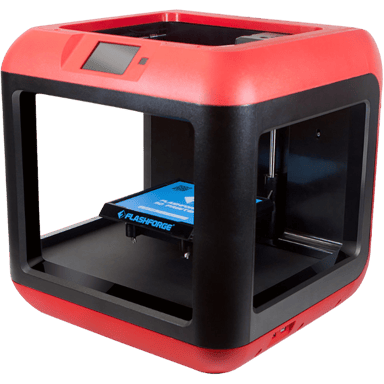
The Flashforge Finder boasts a build volume of 5.5 x 5.5 x 5.5 inches (about 134.25 cubic inches), which is modest but sufficient for hobbyists and educational projects. Its overall dimensions are neatly cubic at 16.54 inches in all directions, which fits well on desks or classroom tables without demanding much space; this is complemented by a weight of around 19.84 pounds; portable yet stable.
According to its engineering data, the Finder operates on an external power supply between 100-240 volts with a power consumption of 65 watts, which is typical for home 3D printers and reflects reasonable energy efficiency. It has a maximum extruder temperature of 464°F (240°C), which supports common filaments like PLA and TPU effectively, but it lacks heated chamber control, which is less crucial for beginners.
The printer uses a direct drive extruder and comes with a 0.4 mm nozzle, though it also supports optional nozzles as fine as 0.2 mm for detailed work. This flexibility ensures that users can tailor print resolutions, ranging from 100 microns minimum layer height, allowing decent print accuracy for its category. On the mechanical front, the printer incorporates an auto bed leveling system alongside manual bed leveling options to enhance print adhesion and reliability.
Connectivity includes USB, Wi-Fi, and SD card options, with a 3.5-inch touchscreen, which makes navigating settings and extensions a bit easier without relying on a PC. Software-wise, it supports popular slicers like Simplify3D and FlashPrint, supporting files like STL, OBJ, and G-code, further underlining its beginner-friendly nature.
Built with safety in mind, it holds FCC certification, overheat protection, and multiple safety sensors, which are critical for unsupervised use, especially in classrooms.
With these specs, the Flashforge Finder presents a solid blend of entry-level performance with thoughtful design elements aimed at accessibility and safety.
User Experience & Performance (Based on Specs)
Design & Build
The cubic frame type and open enclosure design give the Flashforge Finder a welcoming appearance, while the compact footprint suits beginner setups easily. The use of a glass build plate that's removable facilitates simpler post-print cleanup and maintenance, adding to its overall ease-of-use. Paired with interior lighting in white color mode, users gain better visibility for print monitoring.
Though the printer weighs under 20 pounds, its sturdy frame and support components ensure minimal wobble during printing, translating to fewer layer misalignments. The absence of a heated chamber means it's not optimized for advanced materials, but perfectly adequate for the supported PLA and TPU filaments.
Performance
The Flashforge Finder achieves an official max print speed of 100 mm/s but a more practical measured effective print speed of about 60 mm/s, balancing speed with quality. It requires manual first-layer calibration, which is slightly more hands-on compared to some fully automatic systems, but is a reasonable compromise for beginners learning the ropes.
Its print success rate sits around 85%, which speaks to decent reliability in its category; though not perfect, this is respectable for educational and casual use. The incorporation of power-loss recovery is a standout feature, helping mitigate the impact of unexpected outages by resuming prints, which happens frequently in less controlled environments.
Noise-wise, it operates at around 50 decibels, making it relatively quiet for a desktop 3D printer, suitable for shared spaces like classrooms where loud machines could be disruptive.
Connectivity & Software
The range of connectivity options - especially Wi-Fi and USB - combined with support for a mobile app, empowers users to initiate and monitor prints remotely. This modern convenience helps users stay connected without being tethered physically to the printer.
Though lacking cloud-based software and advanced multi-printer management tools, its compatibility with common slicers ensures users won't be locked into proprietary ecosystems, a sign of trustworthy design openness.
Extra Features
Important extras include a filament runout sensor that automatically pauses printing when filament ends, saving time and material waste. Its built-in safety features, like overheat protection and emergency auto shutdown on error, foster peace of mind, especially in environments where novices operate the machine.
Pros & Cons
Pros
- User-friendly design with an easy-to-navigate touchscreen and auto bed leveling
- Reliable safety features, including FCC certification and overheat protection
- Solid connectivity options, including Wi-Fi and mobile app support
- Adequate build volume for educational and hobby projects
Cons
- Limited build volume restricts larger print projects
- No heated chamber or multi-material printing capability
- Manual first-layer calibration is required, which may challenge absolute beginners
- Limited to PLA and TPU filament types, excluding other advanced materials
Price & Value For Money
At around $371 at Flashforge.com, the Finder offers a commendable entry point into 3D printing for beginners and educators. Given its 1-year warranty and respectable power supply voltage range, the pricing feels justified for its safety features and ease of use.
It sits comfortably in the market as a starter printer without over-investing in features unnecessary for its target audience, making it suitable for classrooms or hobbyists who prefer hassle-free assembly and operation.
Quick Take
In short, the Flashforge Finder combines beginner-friendly design, modest yet sufficient performance, and safety-conscious engineering into a handy 3D printer. If we look at the numbers alone, it supports reliable printing with handy auto bed leveling and connected features at an approachable price point, making it a dependable choice for learners.
Closing Recommendation
The Flashforge Finder may be ideal for students, educators, and first-time users seeking an uncomplicated introduction to desktop 3D printing. It appears to perform best for small-scale prototyping and hobby projects involving PLA or TPU filaments, making it less suitable for advanced users looking for high versatility or large build volumes. Overall, its blend of safety, connectivity, and compact form helps users achieve practical results with minimal setup complexity.
Verdict
Rating: Based on the specifications and overall feature set, we believe Flashforge Finder deserves 4.0 out of 5.
- Winner Feature => User-friendly interface with auto bed leveling and good connectivity.
- Needs Improvement => Limited build volume and restricted material compatibility.
Reviews 0
The good, the bad, and the brutally honest.Average Rating


More 3D Printers 453
Unlock more awesome finds.